Research & process engineering
Semiconductor Research
An experimental framework for RIE optimization
Brief
Develop an independent study applying machine learning to semiconductor process optimization.
My roleUndergraduate researcher · Wang Lab
Tools & methodsExperimental design · Machine learning research
ResultSecured a $2,000 research grant and developed the proposal, experimental plan, and data framework. Data collection is planned for January 2027.
Research Preparation
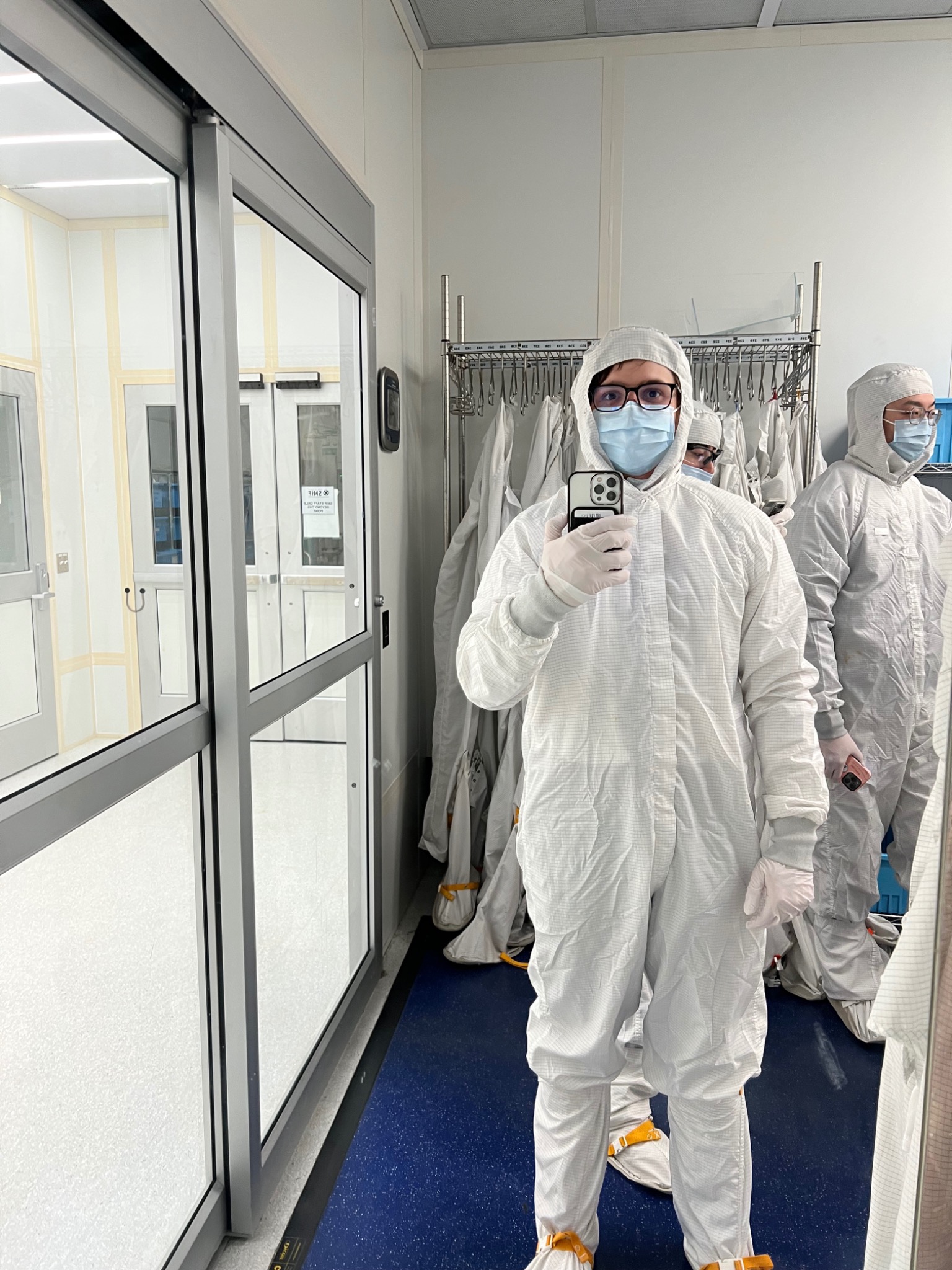
I developed the proposal and experimental framework, secured a $2,000 undergraduate research grant, and completed SMIF cleanroom training and equipment certification. I am being paired with a PhD student in the Wang Lab as I prepare for experimental work.
Experimental Design
Compare Process Conditions
The current study focuses on reactive ion etching of oxide-coated and photoresist-coated silicon wafers. The plan varies gas recipe, chamber pressure, RF power, and etch time, starting from a baseline and changing one factor at a time. Running matched conditions on both coatings will allow their responses to be compared.
Measure Etch Rate and Uniformity
For each planned run, the framework records initial film thickness and final thickness at nine locations across the wafer. Mean thickness removed divided by etch time gives the etch rate; the standard deviation of the final measurements captures variation across the wafer.
Build a Usable Dataset
I designed a run-level data structure linking wafer type and process settings to measured outcomes. Each record includes a run ID, individual gas flows, pressure, RF power, etch time, thickness measurements, etch rate, and uniformity statistics. This creates the foundation for later Python analysis and machine-learning models that could inform process selection.
Current Status
The proposal and experimental plan are developed. Data collection is planned to begin in January 2027 after my return from Madrid; model training and evaluation will follow experimental data collection.
Project Details & Media
MACHINE LEARNING · SEMICONDUCTORS
Building a Foundation for Smarter Etching
Investigating machine learning methods to optimize reactive ion etching parameters for semiconductor nanofabrication.
Explore the research +
My focus: Designed a reactive ion etching study across multiple wafer types and coating conditions, including oxide- and photoresist-coated samples, to evaluate etch rate and wafer uniformity.
Support: Received a $2,000 Duke undergraduate research grant.
Preparation: Completed SMIF cleanroom training and equipment certification, and developed the proposal, experimental plan, and data-collection framework.
Status: The experimental framework is developed; data collection is planned to begin in January 2027 after I return from studying abroad in Madrid.